Giving Until It Breaks: The Uncomfortable Truth About How Nonprofits Burn Through Their Best People
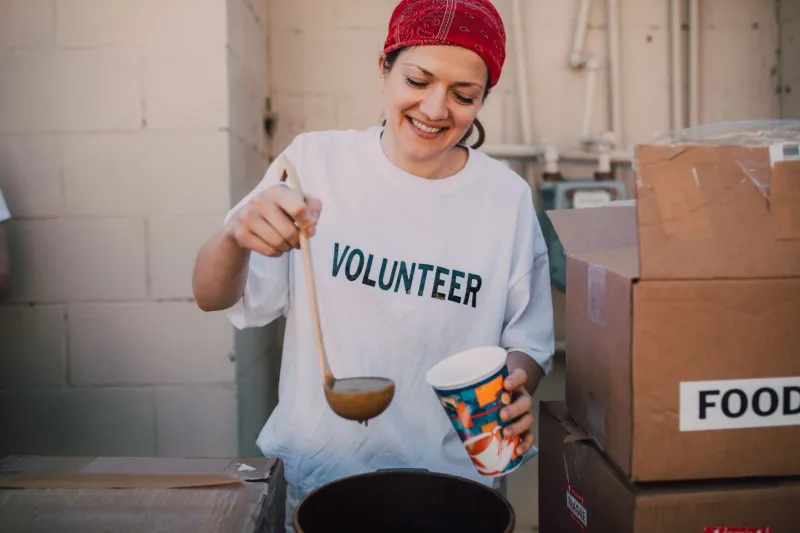
Somewhere in suburban Columbus, Ohio, a woman named Diane has been volunteering at the same food pantry for eleven years. She knows the storage room layout better than most paid staff. She knows which families prefer certain staples, which elderly clients need help carrying bags to their cars, and which donation cycles slow down after the holidays. She is, by every measure, irreplaceable.
She's also quietly thinking about quitting.
"It's not that I stopped caring," she said during a phone call earlier this year. "It's that every time I show up, there's more on my plate than the week before. Nobody asks. It just... appears."
Diane's story isn't unusual. Across the United States, nonprofit organizations are caught in a slow-motion crisis that rarely makes headlines — one where the very people keeping missions alive are being worn down by the weight of expanding expectations, shrinking staff, and a culture that treats volunteer availability as an infinitely renewable resource.
It isn't.
The Gap Between What's Needed and What's Sustainable
Nonprofits in the U.S. are under enormous pressure. Funding is inconsistent, paid staff positions often go unfilled for months, and community needs — particularly post-pandemic — have ballooned beyond what many organizations originally designed themselves to handle. The natural response, for a lot of organizations, has been to lean harder on volunteers.
That logic makes sense on paper. Volunteers are committed. They believe in the mission. They show up.
But believing in a cause and having unlimited bandwidth are two completely different things. And the line between the two is getting blurrier in a lot of volunteer programs.
According to data from the Independent Sector, the estimated value of volunteer time in the U.S. sits at over $31 an hour. That number reflects real labor — skilled, committed, and deeply valuable. But it also reflects something that nonprofit leaders sometimes lose sight of: volunteers are doing actual work. Work that takes time, energy, and emotional capital. Work that, when consistently underestimated or underappreciated, leads to the same burnout you'd see in an overloaded paid employee.
"Mission creep is real, and it doesn't just happen at the organizational level," says Marcus Webb, a volunteer coordinator at a community health nonprofit in Atlanta. "It happens at the individual volunteer level too. You start someone off sorting donations for three hours on Saturday. A year later, they're managing intake, training new recruits, and covering gaps when staff calls out. Nobody planned it that way. It just grew."
Good Intentions, Unsustainable Systems
Here's the paradox at the center of this whole conversation: most of the overreach isn't malicious. Nonprofit leaders and program managers aren't sitting in back rooms plotting to squeeze every last drop out of their volunteers. They're trying to keep the lights on. They're trying to serve more people with fewer resources. They're doing what feels necessary.
But "necessary" and "sustainable" often end up in direct conflict.
Take the case of a literacy nonprofit in the Pacific Northwest — an organization that started as a small tutoring program for elementary school kids and, over eight years, expanded into adult ESL classes, workforce readiness workshops, and after-school programming. The mission grew. The funding grew, modestly. But the volunteer base stayed roughly the same size.
The result? Volunteers who signed up to help a kid read on Tuesday afternoons found themselves being asked to cover adult classes, run orientation sessions for new tutors, and coordinate supply orders. Turnover among volunteers spiked. The organization's most experienced tutors — the ones who'd been there since the beginning — started dropping to once-a-month commitments instead of weekly ones.
"We kept saying yes to opportunities because we thought we had the people to do it," the organization's executive director admitted. "We didn't realize we were actually just redistributing the same people thinner and thinner."
What Right-Sizing Actually Looks Like
The fix isn't simple, but it starts with honesty — the kind that nonprofit leaders sometimes resist because it feels like admitting defeat.
Right-sizing the ask means organizations have to get brutally realistic about what their current volunteer base can actually carry. That means mapping out existing volunteer hours and responsibilities with granular detail, not just counting heads. It means identifying where mission creep has silently added weight to individual volunteers without formal acknowledgment or compensation. And it means having direct conversations with long-term volunteers about what they can sustain — before those conversations become exit interviews.
Some organizations are beginning to build what practitioners call "capacity audits" into their annual planning cycles. Rather than projecting what they want to accomplish and then figuring out how to staff it, they start from what their current volunteer capacity realistically supports, and build programming outward from there.
It's a shift that requires patience and, sometimes, painful decisions about which programs to pause or scale back. But the alternative — continuing to expand on the backs of people who are already stretched — tends to end with the sudden loss of the organization's most experienced and capable volunteers.
"Losing a ten-year volunteer isn't just losing a person," Marcus Webb put it plainly. "It's losing institutional memory, relationships, trust. You don't just replace that with a new sign-up."
The Conversation Nonprofits Need to Have
For volunteers reading this — especially those who recognize something of themselves in Diane's story — the most powerful thing you can do is say something before you hit the wall. Nonprofit coordinators, by and large, are not mind readers. Many of them genuinely don't realize how much has been quietly piled onto a single person's plate over time. A direct conversation about workload isn't a betrayal of the mission. It's an act of self-preservation that actually protects the mission long-term.
And for the organizations themselves, the message is equally direct: the people who show up week after week, year after year, are not an unlimited resource. They are your most valuable asset. Treating them that way means building systems that protect them — not just thanking them at an annual banquet and hoping they come back next fall.
Diane, for her part, hasn't quit yet. She took a step back, had a conversation with her coordinator, and renegotiated what her Saturdays look like. The pantry adjusted. It wasn't easy, but both sides survived it.
"I think they just needed someone to say out loud that I was a person, not a slot on a schedule," she said.
That's not a big ask. But for a lot of nonprofits, it might be the most important one they've ever heard.