The Quiet Backbone: Everyday Americans Who Show Up — Every Single Week — for the Causes That Need Them Most
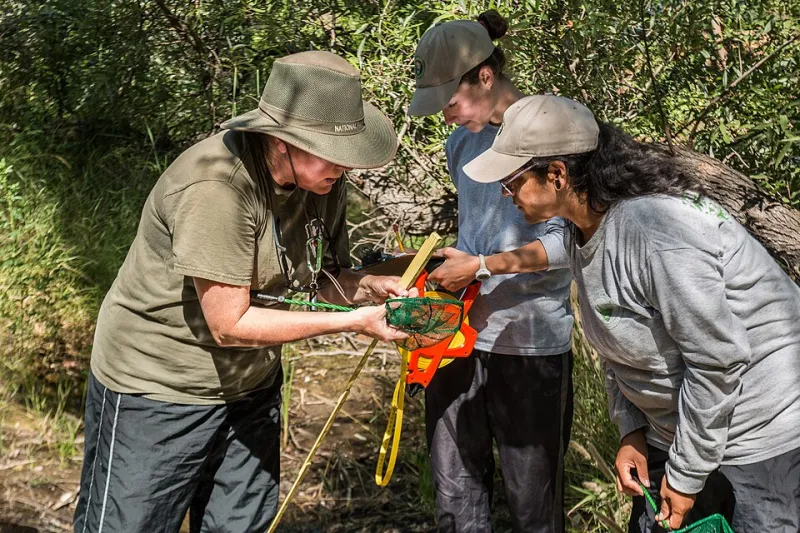
Photo: Santa Monica Mountains National Recreation Area, Public domain, via Wikimedia Commons
Somewhere in Columbus, Ohio, a retired schoolteacher named Margaret has been waking up every Tuesday and Thursday at 5:30 a.m. for the past eleven years. She drives herself to the same food pantry, ties on the same apron, and starts sorting donations before most of the city has brewed its first cup of coffee. She doesn't get paid. Nobody is grading her. And yet — she hasn't missed a shift in over a decade.
"I just can't not go," she told us with a shrug, like it was the most obvious thing in the world.
Margaret isn't unusual. Across the country, there are tens of thousands of people just like her — long-term volunteers who have quietly become the structural foundation of America's nonprofit sector. They're in food banks in Memphis, youth mentorship programs in Denver, animal rescues in rural Georgia, and literacy centers in South Chicago. You won't see them trending on social media. Their names aren't on donor walls. But strip them out of the picture, and entire organizations would buckle overnight.
More Than Just Extra Hands
It's easy to think of volunteering as something you do once — a Saturday at a soup kitchen, a holiday toy drive, maybe a charity 5K. And that kind of engagement absolutely matters. But the people who keep nonprofits actually running are the ones who come back. And come back again. And keep coming back when the novelty is long gone and the work is just... work.
David, a 58-year-old electrician from Phoenix, has been mentoring at-risk teenage boys through a local youth program for going on nine years. He started after his own son went through a rough stretch in high school and a mentor made all the difference. "I just thought, somebody did that for my kid. I can do that for somebody else's kid."
What he didn't expect was how much it would change him.
"I was kind of a loner, honestly. Kept to myself. These kids cracked me open," he said, laughing a little. "Now I got fifteen of them texting me on any given day asking for advice. It's chaos. I love it."
That personal transformation — the way long-term volunteerism reshapes the volunteer as much as it helps the mission — is something researchers and nonprofit leaders talk about a lot. Studies consistently show that people who volunteer regularly report higher levels of life satisfaction, lower rates of depression, and stronger social connections. But for the people living it, it's less about data and more about identity. Volunteering stops being something they do and becomes something they are.
The Part Nobody Talks About
Here's the thing about showing up every week for years: it's not always uplifting. Sometimes it's exhausting, heartbreaking, and deeply frustrating.
Teresa coordinates volunteers at a domestic violence shelter in the Twin Cities. She's been doing it — as a volunteer herself — for seven years. She's watched women return to dangerous situations after the shelter fought hard to help them. She's sat with kids who have seen things no child should ever see. She's cried in her car more times than she can count.
"People think volunteering is this feel-good thing, and sometimes it is," she said. "But sometimes you go home and you just feel the weight of all of it. You have to make peace with not being able to fix everything."
This emotional dimension of long-term service is something that often gets glossed over in the cheerful recruitment flyers. The reality is that sustained commitment to difficult causes takes a toll, and the volunteers who last are the ones who find ways to process that weight — through community, through faith, through perspective, or sometimes just through stubbornness.
"I keep going because if I don't, who does?" Teresa said simply.
Why Consistency Is the Real Superpower
Ask any nonprofit director what they'd rather have — a hundred one-time volunteers or ten consistent ones — and the answer is almost always the same. Consistency builds institutional knowledge, trust, and genuine relationships that can't be replicated by someone who shows up twice a year.
At a literacy program in Atlanta, a volunteer named James has been tutoring adult learners for six years. He's watched students go from barely reading street signs to writing job applications and eventually landing employment. That kind of progress doesn't happen in a single Saturday session. It requires someone who will still be there six months from now, a year from now, remembering where a student struggled and celebrating every inch of ground they gain.
"I know these folks," James said. "I know what they're scared of, what makes them laugh, what they're working toward. That relationship is the whole thing. You can't shortcut it."
For the organizations themselves, long-term volunteers often become informal ambassadors, trainers for newer recruits, and even advocates who help secure funding and community support. They carry institutional memory that no onboarding document can fully capture.
What Keeps Them Coming Back
So what's the secret? After talking with dozens of long-term volunteers for this piece, a few themes kept surfacing.
Purpose over task. The volunteers who stick around longest aren't just completing a to-do list — they're connected to a why that matters personally to them. Whether it's a lived experience with the issue or a deeply held value, that emotional anchor makes the hard days survivable.
Community. Almost universally, long-term volunteers describe the relationships they've built — with staff, with fellow volunteers, with the people they serve — as one of the primary reasons they stay. The mission pulls them in, but the people keep them there.
Being seen. It doesn't take much — a genuine thank-you, a check-in from a coordinator, acknowledgment that their contribution matters. Small gestures of recognition go a long way toward making someone feel like more than just a warm body filling a slot.
Margaret from Columbus put it best, in her matter-of-fact way: "I feel useful. At this stage of my life, that's not nothing. That's actually everything."
You Could Be One of Them
Every single person profiled in this piece started the same way — they showed up once, not sure if they'd come back. Then they came back. And somewhere along the way, it became part of who they are.
If you've been thinking about getting involved with a cause that matters to you, the best thing you can do isn't to wait for the perfect opportunity. Find something local, show up, and see what happens. The organizations need you. And if you let it, the work has a funny way of giving back more than you put in.
That's the thing about service. It looks like you're doing something for someone else. But ask any of these folks, and they'll tell you — it's one of the most selfish things they've ever done. In the best possible way.