Too Many Hands, Not Enough Room: The Volunteer Bottleneck Nobody Wants to Talk About
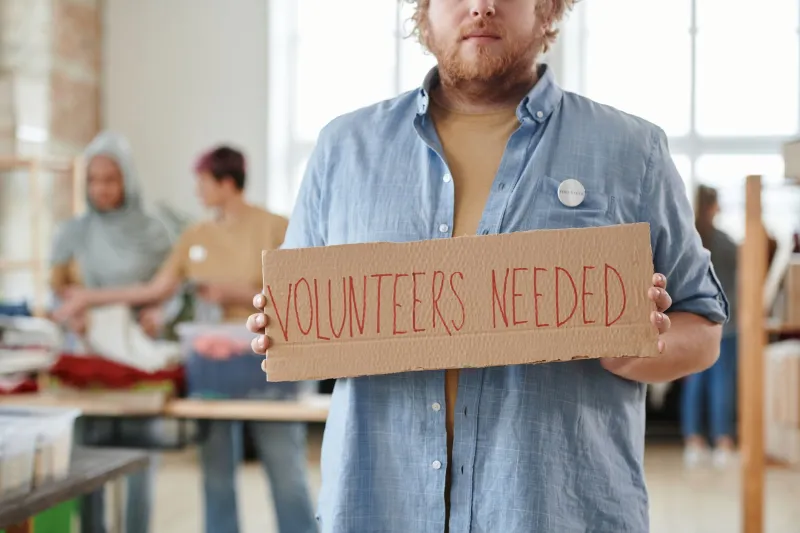
Imagine signing up to help. You fill out the form, write the little paragraph about why you care, maybe even clear your Saturday schedule. Then you wait. A week passes. Then two. Then you get a generic email that says something like "We'll be in touch when a spot opens up." And then — nothing.
You didn't do anything wrong. The nonprofit didn't do anything wrong, exactly. But somewhere between your enthusiasm and their front door, something broke down. And the community that needed both of you? It got left out entirely.
This is the volunteer waiting list problem, and it's a lot more common than most people realize.
When "We're Overwhelmed with Interest" Isn't a Win
Nonprofits love to celebrate community engagement. And rightfully so — when people show up, it means something. But there's a version of showing up that organizations genuinely aren't equipped to handle, and it creates a bottleneck that's almost invisible from the outside.
According to VolunteerMatch and other sector research, a significant number of nonprofits — particularly smaller, community-based organizations — report turning away or indefinitely delaying volunteers not because they don't need the help, but because they don't have the internal capacity to onboard, train, or supervise new people. The very infrastructure required to use volunteers is itself understaffed.
Think about that for a second. An organization might desperately need ten more people on the ground, but if their volunteer coordinator is already stretched across three other roles, adding ten new people isn't a solution — it's a problem in disguise.
The Hidden Cost of Limbo
Here's what gets lost in that gap: momentum. Motivation. And eventually, the volunteers themselves.
People who sign up to serve are often in a particular emotional window — inspired by something they saw, read, or experienced. That window doesn't stay open forever. When the intake process drags on for weeks or the onboarding feels like applying for a second mortgage, people quietly move on. They find another organization, pick up a different cause, or — worst of all — conclude that volunteering just isn't worth the hassle.
Take what happened with a food bank in the Midwest after a major local factory closure. Hundreds of newly unemployed residents, suddenly with time on their hands and a fierce desire to give back to their neighbors, flooded the organization with volunteer applications. The food bank's leadership was genuinely moved. They were also completely unprepared. With only one part-time volunteer coordinator and a paper-based intake system, they could realistically onboard about fifteen new people per month. Within sixty days, the surge had faded. Most of the applicants had moved on. The food bank was left with the same capacity it had before the factory closed — and a community that needed far more.
Role Confusion Makes It Worse
Another piece of this puzzle that doesn't get enough attention: unclear role definitions. A lot of nonprofits post generic volunteer opportunities that sound something like "help us make a difference!" — which is lovely in spirit but useless in practice.
When roles aren't specific, the matching process becomes murky. Volunteers don't know what they're signing up for. Staff don't know how to deploy them. And everyone ends up frustrated. A retired nurse who wanted to do health screenings gets assigned to stuff envelopes. A marketing professional who offered her skills ends up painting a fence. Not that painting fences is bad — but mismatched placements burn people out fast, and they rarely come back.
Organizations that invest in defining discrete, specific volunteer roles — even if it takes time upfront — consistently report better retention, higher volunteer satisfaction, and more actual impact delivered. It's not glamorous work. But it's foundational.
What Smart Nonprofits Are Doing Differently
The good news is that some organizations have figured out how to uncork the bottleneck, and their approaches are worth stealing.
Tiered onboarding. Instead of requiring every new volunteer to complete the same lengthy orientation process before they can do anything, some nonprofits now use a tiered system. New volunteers can start with low-barrier, low-risk tasks immediately — showing up, sorting donations, greeting guests — while the deeper credentialing and training happens in parallel. This keeps people engaged while the administrative process catches up.
Volunteer-led onboarding. A handful of smart organizations have started training experienced volunteers to help onboard new ones. It reduces the burden on paid staff, creates leadership opportunities for long-timers, and builds community among volunteers in a way that top-down orientation rarely does.
Digital intake systems that actually work. This sounds obvious, but you'd be surprised how many nonprofits are still managing volunteer rosters through email threads and spreadsheets. Purpose-built platforms like Galaxy Digital, InitLive, or even a well-configured Airtable setup can dramatically reduce the administrative drag on volunteer coordinators and give organizations a clearer picture of who's waiting, who's ready, and where the gaps are.
Honest capacity conversations. Some nonprofits have started being transparent with prospective volunteers about wait times and intake limits. It feels counterintuitive — who wants to tell an eager helper "not yet"? — but it actually builds trust. Volunteers who understand why there's a delay are far more likely to stick around than those who feel like they've been ignored.
The Community Pays the Tab
It's easy to frame this as a nonprofit management problem. And it is. But the ripple effects land squarely on the communities these organizations exist to serve.
Every volunteer who gets stuck in limbo and walks away represents meals not delivered, tutoring sessions that didn't happen, shelter beds that didn't get made, phone calls that went unanswered. The math is brutal and simple: capacity constraints at the organizational level translate directly into unmet needs at the community level.
For the people Operation TOTW talks to — the volunteers who drove an hour to an orientation that got cancelled, the retirees who offered years of professional expertise and never heard back, the college students who wanted their first real service experience and got a form letter — this isn't abstract. It stings. And it makes them less likely to try again.
What You Can Do Right Now
If you're a volunteer who's been stuck in someone's intake queue, don't give up on service — give the organization a direct call or email. Sometimes a human conversation moves things faster than any online form. And if they truly can't place you in a reasonable timeframe, it's okay to redirect your energy somewhere that can.
If you work at or lead a nonprofit, take an honest look at your volunteer intake pipeline. Where do people drop off? How long does onboarding take? Are your roles clearly defined? Could any part of this process be led by volunteers themselves?
The people are out there. They want to show up. The question is whether we're building the doors wide enough to let them in.
Operation TOTW exists to connect the people who want to give with the communities that need them most. If your organization is working through volunteer capacity challenges, we'd love to hear your story.